 Future-Ready.net
Mental Models
The Decision Lighthouse: How to Think in Fog
20260323T1
Some decisions are made in daylight. The options are visible, the trade-offs are known, and the cost of being wrong is manageable. Others arrive in fog. The shoreline disappears. The old markers fade. You are still responsible for steering anyway.
What a lighthouse really does
A lighthouse does not remove the fog. It does something better: it provides a reliable reference point when visibility is low. It tells sailors where the danger is, where the coastline lies, and how to orient themselves when instinct alone is not enough.
In uncertain times, principles play that role. They do not predict the future in detail. They provide a beam strong enough to help you avoid obvious wreckage.
Three beams for uncertain decisions
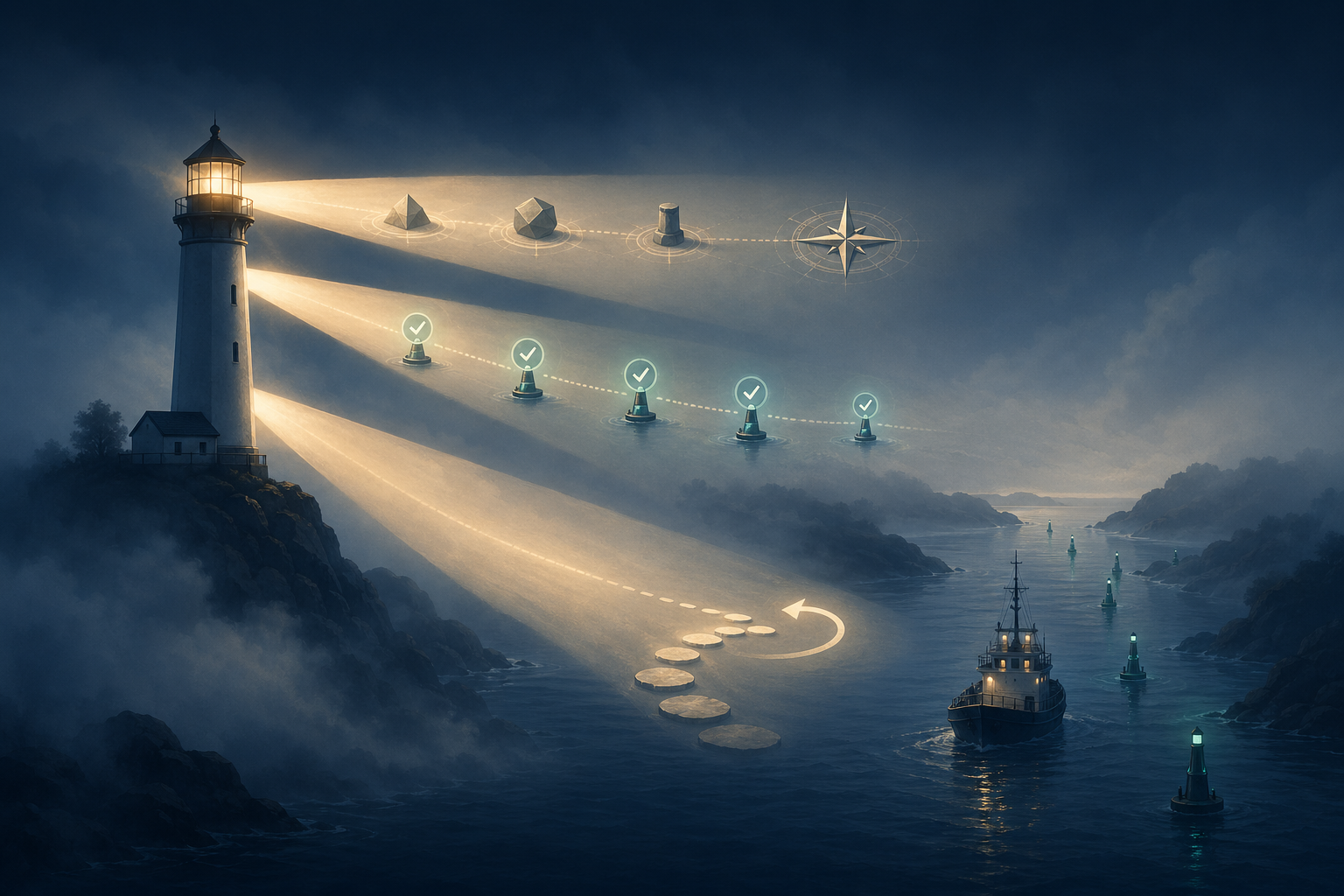
First, protect reversibility. If you cannot know enough yet, prefer moves that preserve future options. Second, shorten feedback loops. The faster reality answers you, the less you need to rely on speculation. Third, anchor in values. Pressure reveals what matters by tempting you to forget it.
- Reversible beats grand but brittle.
- Small experiments beat dramatic guesses.
- Clear principles reduce panic.
AI age fog
This is where many teams get trapped today. New tools arrive weekly. Advice changes by the month. Everyone feels pressure to move faster than their understanding. In that environment, a lighthouse mindset is invaluable. You do not need perfect foresight. You need enough orientation to keep making sane next moves.
That may mean pilot projects instead of a full rewrite, a human review step instead of blind automation, or a rule that speed never outranks trust in customer-facing decisions.
Try this
- Write down the principle that should govern the decision before debating tactics.
- Prefer the next safe step over the perfect distant answer.
- Ask which option gives you better feedback fastest.
Resources
A few strong places to go deeper if this idea resonates.