 Future-Ready.net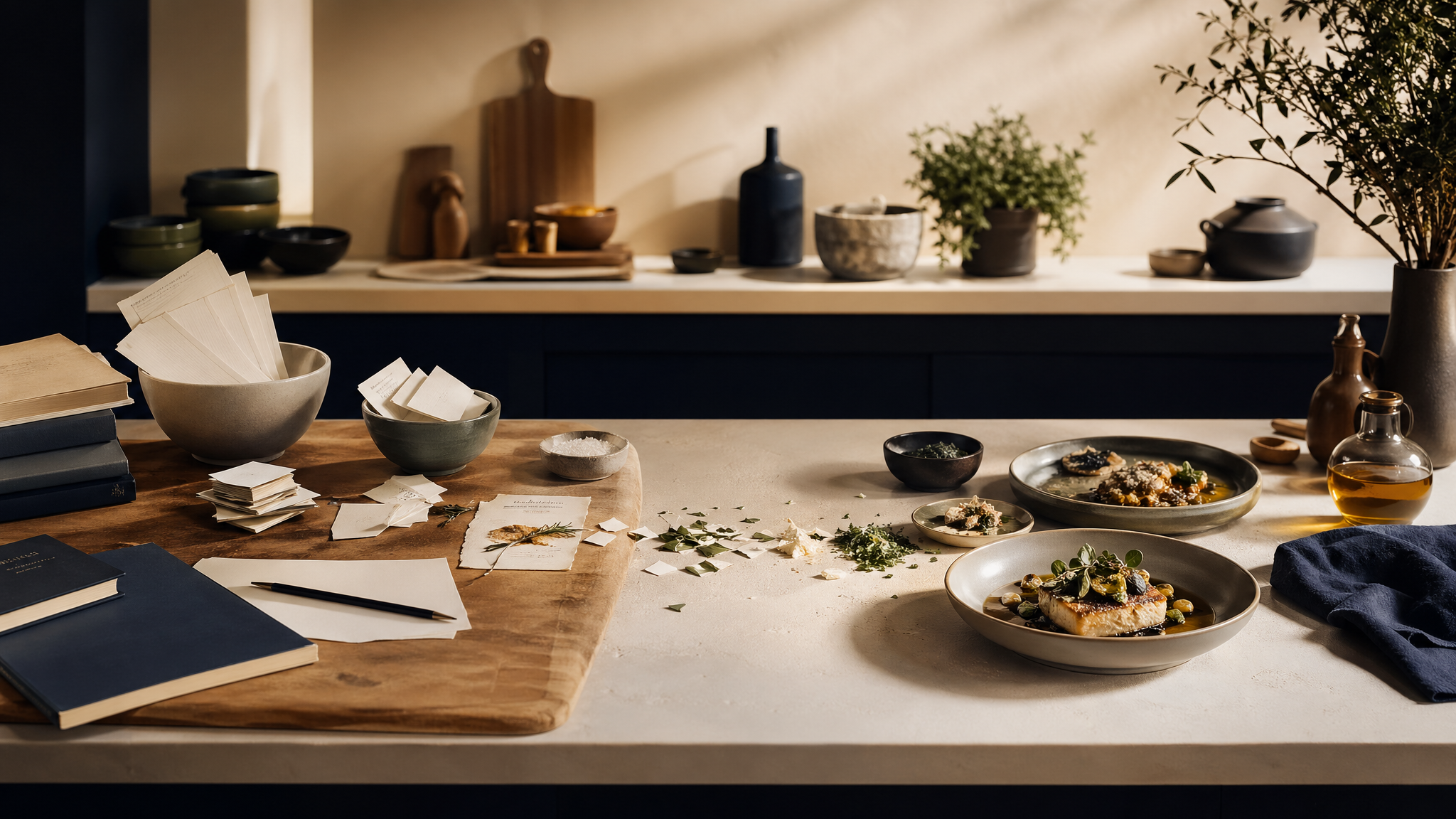
Learning How to Learn
The Memory Kitchen: How Knowledge Becomes Something You Can Actually Use
20260323T1
A lot of people treat learning like grocery shopping. They collect books, courses, clips, notes, quotes, and tabs as if possession were progress. But a pantry full of ingredients is not dinner. Knowledge works the same way.
Collecting is not the meal
Useful ingredients matter. So does variety. But nobody confuses a shelf of spices with the experience of actually cooking. In learning, raw inputs are only the starting point.
This is why information-rich people sometimes feel strangely underpowered. They have collected more than they have transformed. Their shelves are full, but their skills are still hungry.
The four stages of usable knowledge
First you collect. You find good raw material. Then you connect. You relate new ideas to things you already know. Then you cook. You restate, test, practice, compare, explain. Finally you serve. You use the idea in real decisions, projects, or teaching.
Skipping the cooking stage is the classic mistake. It feels productive to highlight a page. It is productive to summarize the page in your own words and then use it somewhere within a week.
- Collect selectively.
- Connect actively.
- Cook through retrieval and explanation.
- Serve by using the knowledge in the wild.
Designing a better learning habit
One of the best ways to learn faster is to reduce the gap between input and use. Read something in the morning, apply one element that afternoon. Watch a tutorial, then reproduce it from memory. Listen to a podcast, then discuss one idea without checking your notes.
The goal is not to consume perfectly. It is to metabolize what matters.
Try this
- After your next article or chapter, write a five-sentence summary from memory.
- Use one idea within 24 hours.
- Notice whether you are shopping for knowledge or cooking with it.
Resources
A few strong places to go deeper if this idea resonates.