 Future-Ready.net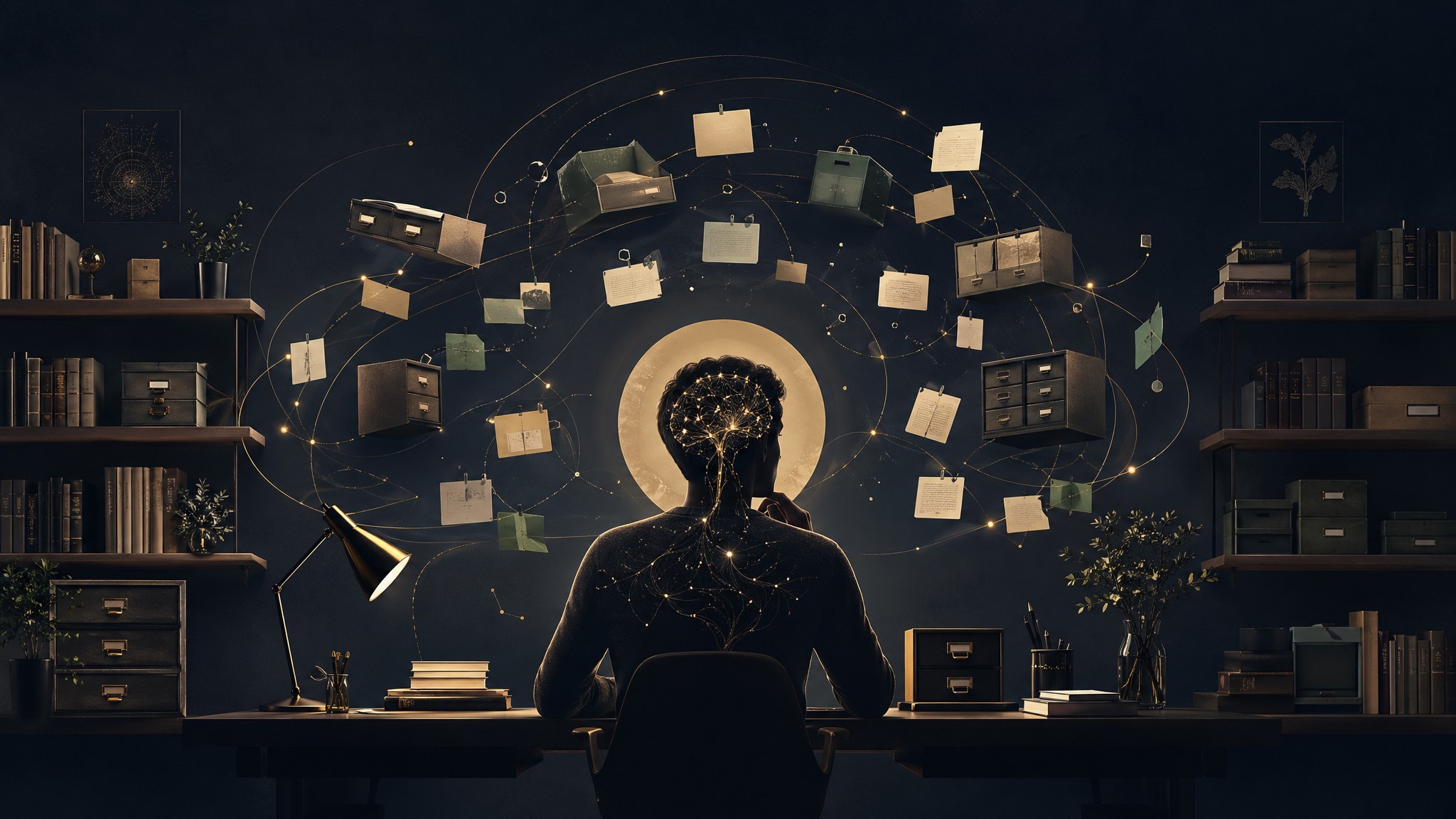
Learning How to Learn
Building a Second Brain Without Outsourcing Your First
20260323T1
A good workshop has shelves. A good kitchen has labeled drawers. A capable mind also benefits from external structure. Notes, bookmarks, references, and databases can all extend memory. The trouble starts when we confuse storage with understanding.
When the shelves become a museum
Digital note systems make collection seductive. Everything can be saved, tagged, and linked. That promise is real. But without periodic distillation, a note archive becomes less like a toolbench and more like a museum of abandoned curiosity.
You know the pattern: clipped quotes, saved threads, half-read highlights, and a growing feeling that the system is impressive while your thinking remains unchanged.
Support, not substitution
A second brain should hold what your first brain should not waste energy holding verbatim: references, checklists, project state, source material, and partially developed thoughts. But judgment, synthesis, and understanding still have to happen in you.
That is why distillation matters more than capture. If a note does not become clearer over time, it is not yet helping much. The best note systems are less like vacuum cleaners and more like workshops where raw material gets shaped.
- Capture lightly.
- Distill regularly.
- Revisit when a project needs it.
- Apply before collecting more.
A humane rule for notes
Before saving something, ask: what future situation would make this useful? If you cannot answer, the note may be a souvenir, not a tool. That is fine occasionally. It is dangerous as a default.
The aim is not to remember everything. The aim is to build a system that helps you think better when it counts.
Try this
- Pick one notes folder and delete or archive the obvious dead weight.
- Distill one old note into a short actionable summary.
- Use your note system to support a real project this week.
Resources
A few strong places to go deeper if this idea resonates.