 Future-Ready.net
For a long time, work rewarded people who could produce. Write the report. Make the slide deck. Draft the email. Build the first version. As AI becomes better at production, the center of value moves. The scarce part is no longer always the artifact. It is knowing what should exist, why it matters, whether it is good, and who is responsible for the consequences.
Production is becoming abundant
AI changes the economics of output. A person who once struggled to create ten options can now generate one hundred. That is useful, but it also creates a new problem: abundance makes selection harder. More output does not automatically mean better direction.
When production is cheap, weak judgment becomes more expensive. A bad brief, a shallow assumption, or a confused priority can now be amplified at machine speed.
- Output is easier to create.
- Quality is harder to recognize.
- Responsibility cannot be delegated to the tool.
The human edge stack
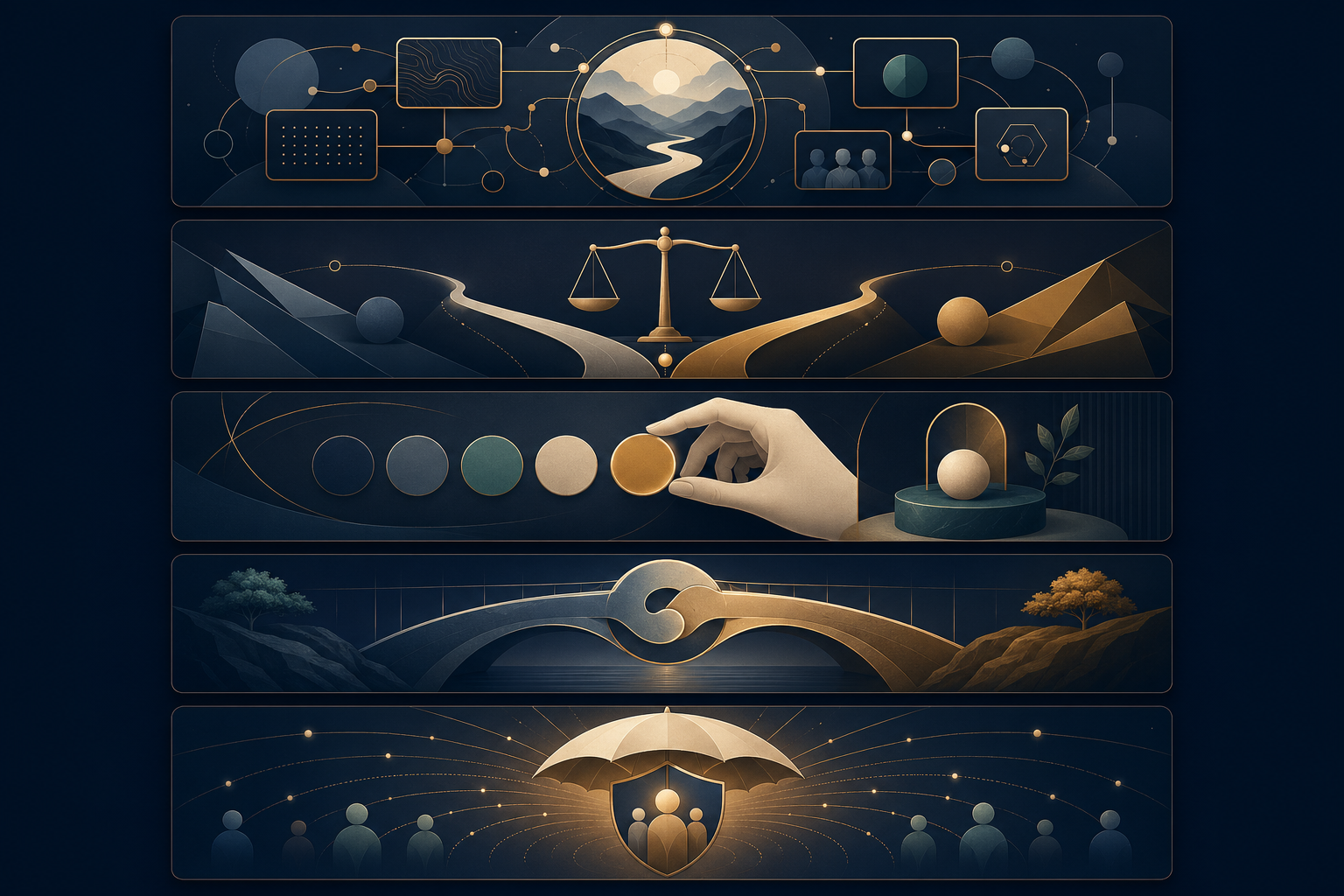
The human edge is not one magical trait. It is a stack of capabilities that sit above execution: context, judgment, taste, trust, and responsibility. AI can assist each layer, but it cannot fully own them for you.
Context asks what matters here. Judgment weighs tradeoffs. Taste recognizes fit and quality. Trust comes from repeated reliability. Responsibility means someone is willing to stand behind the work.
What this means for careers
The safest career posture is not to compete with AI at raw production. It is to become the person who can aim, evaluate, integrate, and be trusted with meaningful outcomes. The more synthetic output floods the world, the more valuable grounded human judgment becomes.
- Move closer to decisions, not just tasks.
- Build a public record of reliability.
- Practice explaining why one option is better than another.
Try this
- Take one task you use AI for and ask what human layer still determines quality.
- Write down the criteria you use to judge whether the output is good.
- Practice explaining the decision, not just showing the result.
Resources
A few strong places to go deeper if this idea resonates.
- Farnam Street on mental models
- Cal Newport on deep work
- Nielsen Norman Group on AI and UX judgment