 Future-Ready.net
AI can make learning faster, but it can also make learners weaker. The difference is whether you use it to replace effort or to improve feedback. Deliberate practice with AI means keeping the hard part that builds skill while using the machine to shorten the loop between attempt and correction.
The dependency risk
If AI always writes the first draft, solves the problem, and explains the answer, you may feel productive while your own ability stays thin. This is comfortable, but fragile. The real test is whether you can perform when the tool is absent, wrong, or insufficient.
Use AI as coach, not crutch
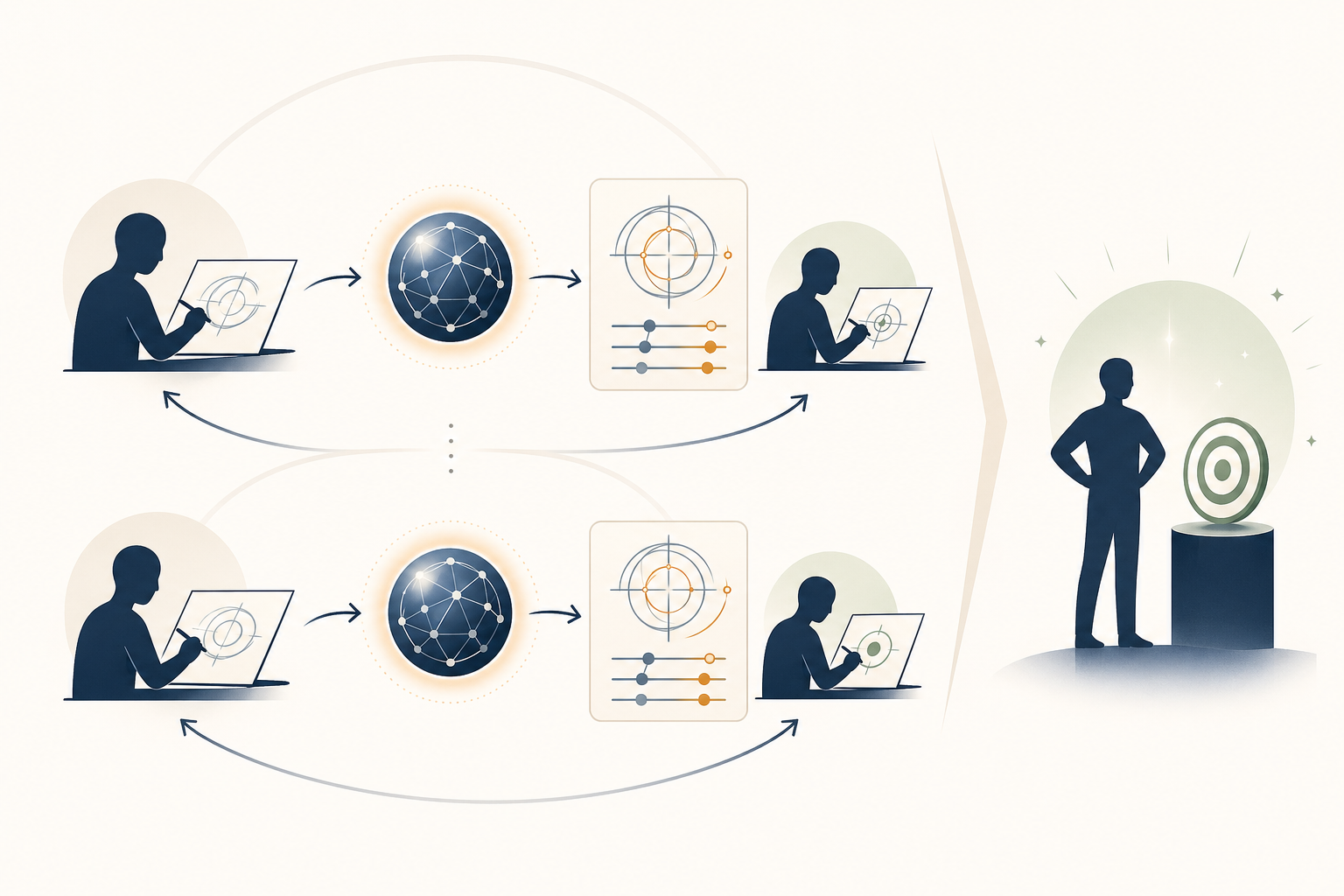
A coach does not lift the weight for you. A good coach sets the exercise, observes your attempt, gives feedback, and raises the standard. AI can do this surprisingly well if you ask for critique after you have tried first.
The sequence matters: attempt, feedback, correction, repeat. If feedback comes before attempt, learning gets outsourced.
- Try before asking.
- Ask for diagnosis, not replacement.
- Repeat the corrected version.
- Test without help.
Build independence into the loop
Every AI-assisted learning session should include an independence rep. Close the tool. Recreate the answer. Explain the principle. Solve a similar problem. This turns AI from a dependency engine into a practice partner.
- Use AI to generate drills.
- Use AI to critique your work.
- Use AI to vary examples.
- Do the final rep alone.
Try this
- Before asking AI, make your own first attempt.
- Ask for three specific critiques.
- Redo the work once, then perform a final version without help.
Resources
A few strong places to go deeper if this idea resonates.
- Peak by Anders Ericsson and Robert Pool
- Make It Stick by Brown, Roediger, and McDaniel
- The Art of Learning by Josh Waitzkin